Top Toys for Christmas 2026: The STEM Toys Kids Actually Want
2026 Christmas Toys STEM Toys
Short answer: The toys topping Christmas 2026 wish lists are STEM kits kids can build, wire, and experiment with — circuit kits, build-and-play engineering sets, and hands-on science toys. If you want a gift that survives past New Year's Day, pick one matched to your child's age from the guide below, and buy it early: the popular kits sell out every December.
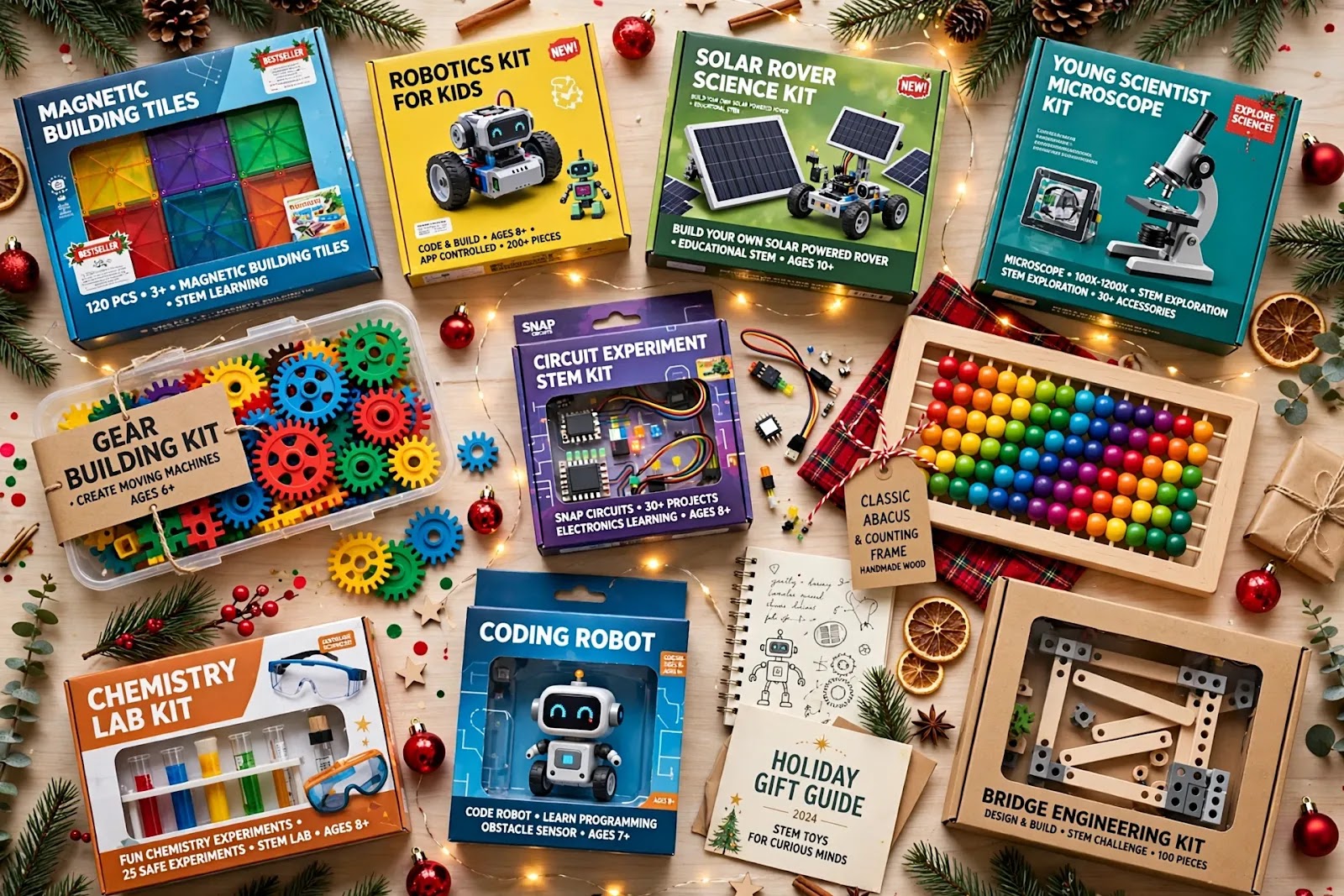
Why STEM toys dominate the 2026 wish lists
Every holiday season has a theme. In 2026, it's unmistakable: parents and kids alike are searching for toys that do something. Circuit kits, build-it-yourself engineering sets, and science experiment boxes are spiking in interest right as the holiday shopping season ramps up — and it's not hard to see why.
- They hold attention. A toy that lights up, moves, or reacts to what a child builds keeps them engaged far longer than a toy that just sits on a shelf.
- They grow with the child. Most quality STEM kits have layered difficulty — a 7-year-old builds the starter project, then comes back for the harder ones months later.
- Parents feel good buying them. In a season of plastic clutter, a gift that teaches circuits, coding logic, or engineering principles feels like money well spent.
- Kids ask for them by name. Trending kit formats get talked about at school and on kids' video channels, which is exactly what drives a Christmas wish list.
The golden rule of 2026 toy shopping: if it builds, wires, launches, or erupts — and matches your child's age — it's a safer bet than another passive plastic toy.
For a closer look at the kits themselves, see our guide to STEM learning kits for children.
Age-by-age picks: what actually works
The number-one mistake parents make is buying a kit meant for an older child. A frustrated 6-year-old with a 10+ circuit set won't touch it again. Match the age first, the "cool factor" second.
| Age group | Best toy type | Why it works at this age |
|---|---|---|
| 4–5 | Large-piece building sets, simple cause-and-effect science toys | Big parts are safe and satisfying; kids learn "I do this, that happens" — the foundation of STEM thinking. |
| 6–7 | Beginner building kits, magnetic tiles, simple machines sets | Fine motor skills are ready; open-ended building rewards creativity without strict instructions. |
| 8–9 | Intro circuit kits, build-and-play engineering sets, crystal-growing and chemistry kits | The sweet spot: kids can follow multi-step instructions and genuinely understand the science behind what they built. |
| 10–12 | Advanced circuit and robotics kits, coding toys, model engineering sets | Ready for real concepts — electricity, programming logic, mechanical advantage — presented as play. |
| 13+ | Programmable robotics, electronics project kits, advanced model builds | Teens want a challenge and a result they can show off; open-ended kits beat single-project boxes. |
When in doubt, buy for the younger end of a kit's age range. A toy a child masters quickly gets played with; a toy that defeats them gets shelved.
The trending formats parents keep asking about
A few kit styles are getting outsized attention this season. Here's what each one actually is, so you can shop the category with confidence instead of chasing one specific brand box.
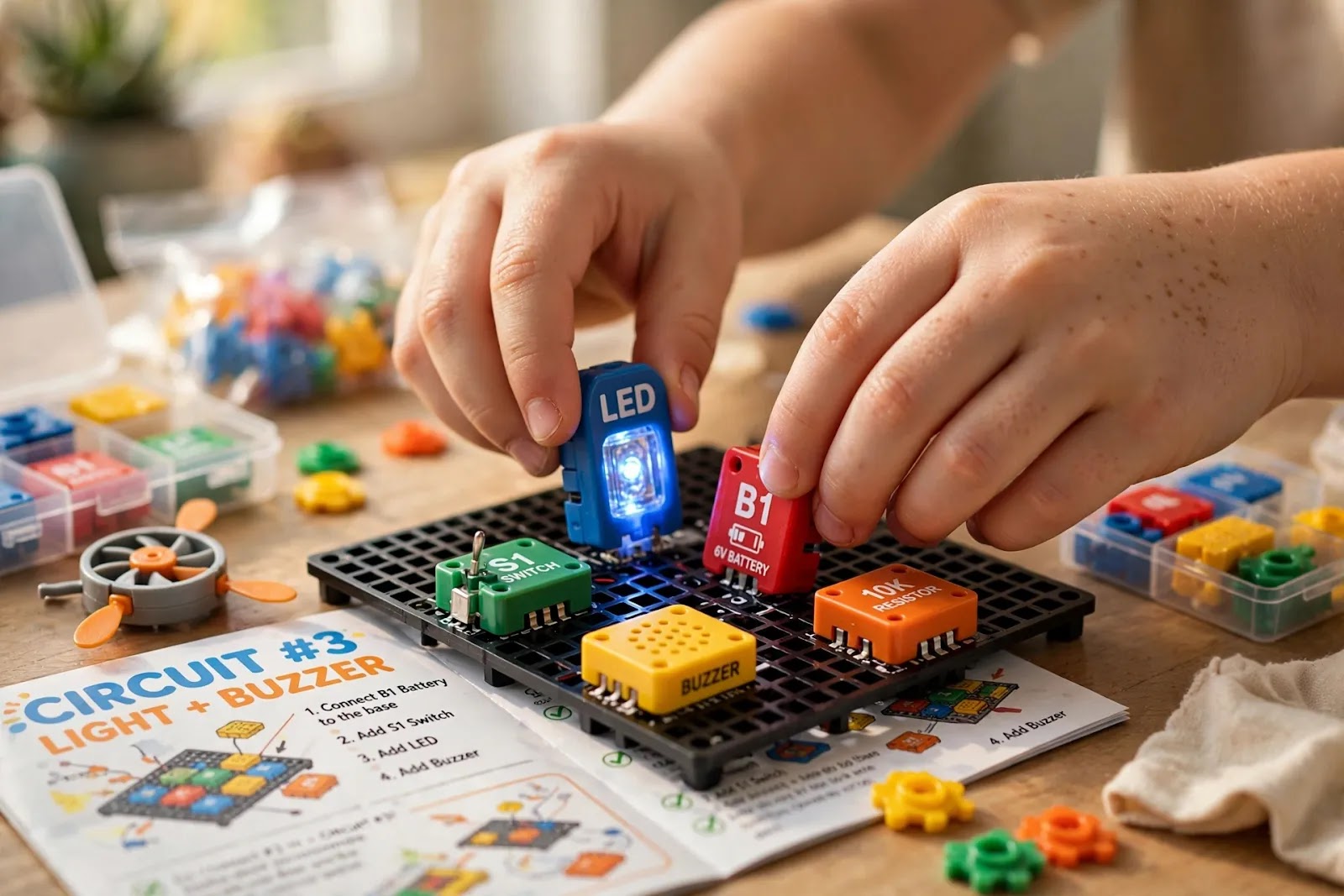
Snap-together circuit kits
These are the breakout stars of 2026. Color-coded electronic components snap onto a grid — no soldering, no tools — and kids build working circuits: doorbells, radios, light sensors, alarms. The learning is genuine (series vs. parallel circuits, switches, resistors) but it feels like play. Look for sets with 50+ projects so the kit doesn't get exhausted in a weekend.
Monthly-style build kits (CrunchLabs-type)
Engineer-designed build boxes — think mechanical toys with real moving parts, often themed around satisfying physics concepts. They're popular because each build teaches one clear idea (momentum, hydraulics, electromagnetism) and the finished toy is genuinely fun afterward. Great for the 8–12 crowd that likes "how things work" content.
Airflow and motion toys
Tubes, ramps, and air-powered launchers that kids reconfigure endlessly. They look simple, but they're stealth physics lessons — air pressure, trajectory, cause and effect. Excellent for younger kids (5–8) and for siblings of different ages to play together, since there's no wrong way to use them.
Classic chemistry and crystal kits
Still going strong. Growing crystals, fizzy reactions, and color-changing experiments remain some of the most-gifted STEM toys because the results are visual and dramatic. Buy from established makers — cheap knockoffs sometimes skimp on instructions and safety labeling, which matters when chemicals are involved.
Gift-buying tips for the 2026 season
- Buy early — seriously. The popular kits sell out every December, and restocks rarely arrive before Christmas. If a toy is trending now, assume it will be gone by mid-December.
- Track prices, don't guess. Holiday toy prices swing wildly. Use a price-tracking tool or wishlist alert on major retailers and buy when the price dips — don't assume Christmas Eve will bring a sale on the hot items (it usually brings empty shelves instead).
- Check the piece count and project count. Two kits can look identical on the box; the one with 100 projects beats the one with 20 every time. Longevity is the real value metric.
- Read the age range, then go one step younger. Manufacturers are optimistic. A kit labeled 8+ that a 7-year-old can actually finish will get ten times the play.
- Skip the single-use gimmicks. If the entire toy is one trick that takes five minutes, it won't survive the holiday. Favor kits with replayability.
For a gift the whole family can share on Christmas Day, look at family board games for all ages.
And for the creative kid on your list, you cannot go wrong with quality art supplies for creative kids.
Budget picks vs. splurges
You don't need to spend big to win Christmas morning — but it helps to know where the money goes.
Budget-friendly (stocking-stuffer territory)
Small experiment kits, mini building sets, and single-project science toys. These are perfect as secondary gifts or for younger kids with short attention spans. The trade-off: less longevity, so pair them with something bigger or treat them as the "extra" gift.
Mid-range (the sweet spot)
This is where most of the best value lives: full circuit starter kits, magnetic tile mega-sets, and multi-project build boxes. One solid mid-range STEM kit genuinely entertains for months and covers the "main gift" slot for most families.
Splurges (the big Christmas-morning moment)
Programmable robotics kits, large electronics workbenches, and premium model engineering sets. Worth it for a child who has shown sustained interest — a kid who loved last year's starter circuit kit will be over the moon with the advanced version. Not worth it as a gamble on an untested interest; match the splurge to proven curiosity.
FAQ
What are the top toys for Christmas 2026?
STEM building and experiment kits lead the 2026 wish lists — snap-together circuit kits, build-it-yourself engineering sets, airflow motion toys, and classic chemistry kits. Interest in these categories is spiking right now as the holiday shopping season begins, and the most popular kits historically sell out by December.
What is the best STEM toy for a 7-year-old?
At 7, go for open-ended building: magnetic tiles, beginner building kits, or simple machine sets. Kids this age have the motor skills for real building but do best without strict, complex instructions. Save the full circuit kits for 8+, when they can follow multi-step builds and understand the science.
What is the best STEM toy for an 8-year-old?
Eight is the sweet spot for intro circuit kits and build-and-play engineering sets. Kids can follow layered instructions, grasp basic electricity and mechanics, and — crucially — they still play with genuine enthusiasm. A circuit starter kit with 50+ projects is one of the highest-value gifts you can buy at this age.
When should I buy Christmas toys in 2026?
Now. Trending toys sell out every December, and the kits spiking in interest right now are the most likely to vanish from shelves. Track prices on the specific kits you want and buy on a dip rather than waiting for a last-minute sale that probably won't come on the hot items.
Are STEM toys actually good for kids, or just marketing?
The good ones are genuinely good. Building a working circuit teaches real electrical concepts; a build kit teaches mechanical thinking; chemistry kits teach the scientific method (hypothesis, test, observe). The key is picking age-appropriate kits from reputable makers — a well-designed kit teaches, a cheap knockoff frustrates. Match the age range, favor multi-project kits, and you'll get real learning disguised as play.